Tony and Jarvos
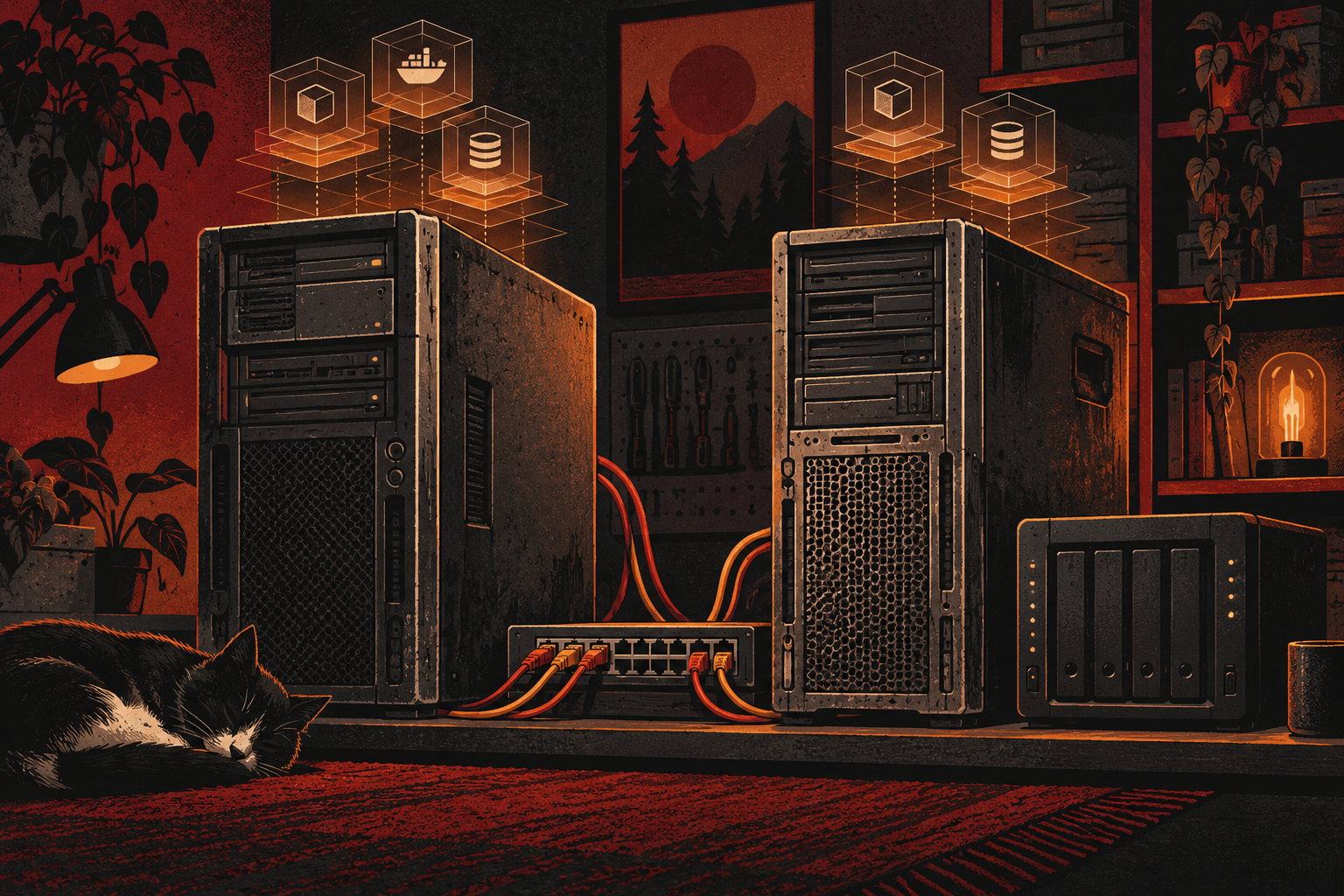
The two machines are named Tony and Jarvos. Tony is mainly where services and experiments run. Jarvos takes on more storage and backup work. Dividing their roles lets me try new things without making everything depend on one system.
Together they form a Proxmox cluster. This provides one central environment for managing containers, virtual machines and storage, while both physical machines remain useful on their own.
What runs on them
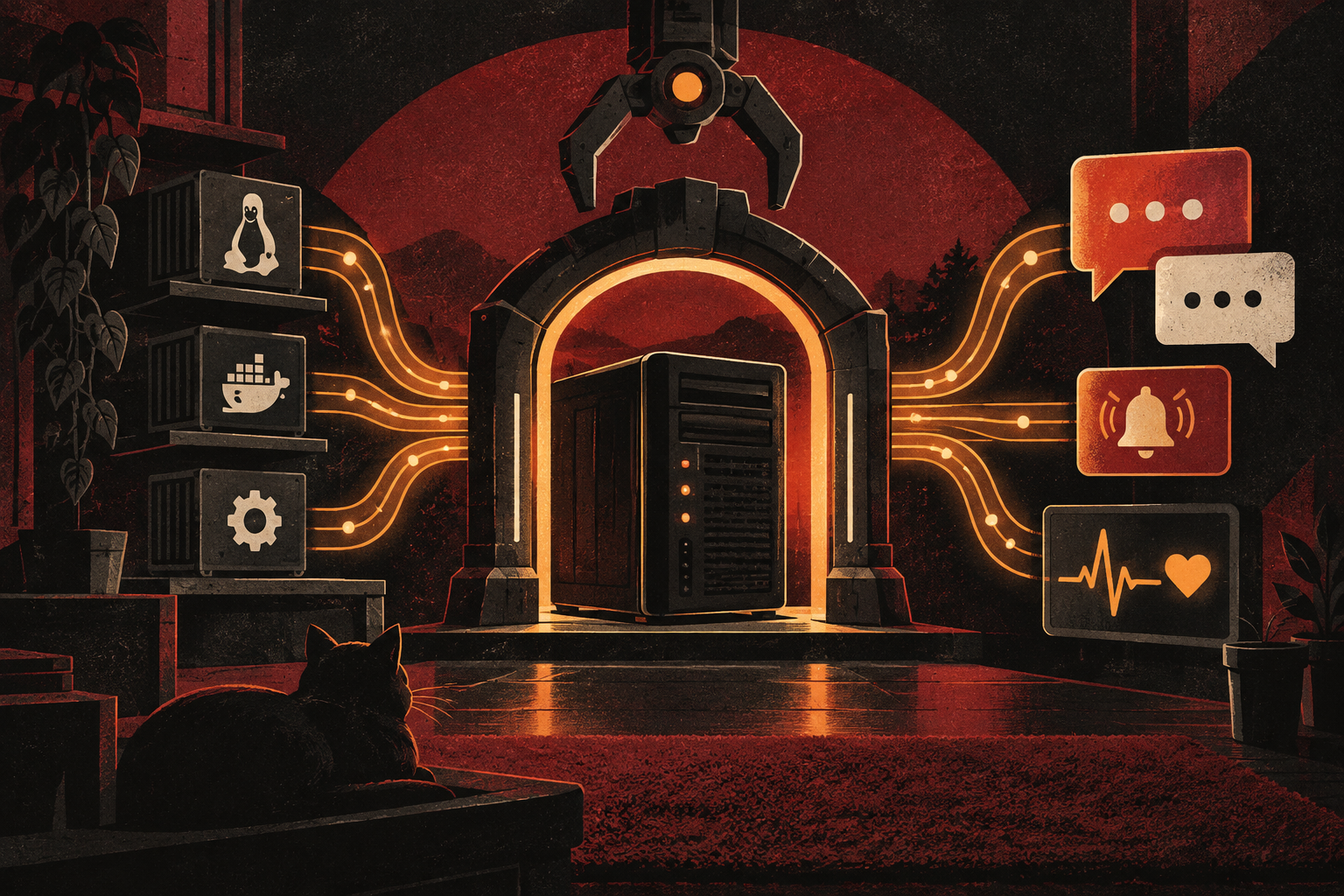
The environment hosts several personal services, including ESPHome, a Cloudflare tunnel, OpenClaw and a local AI server. Some components run in lightweight Linux containers; other applications can use a full virtual machine when they need more isolation or their own operating system.
That mixture makes the homelab interesting: every application requires a fresh choice between simplicity, performance, isolation and maintenance.
Storage and backups
Older hardware can still be very useful, but storage needs extra attention. Both servers combine their system drive with two hard drives in RAID1. That protects against one drive failing, but does not replace a real backup.
I therefore use Proxmox Backup Server and scheduled backups with different retention periods. This lets me restore a container or virtual machine after a failed change instead of preserving only an individual file.
Problems are part of it
A homelab is never entirely finished. During the build I dealt with cluster settings, quorum, storage choices and a lingering cluster node. Such problems are frustrating when they appear, but they reveal how the underlying infrastructure really works.
I therefore keep improving my change notes, checking backups and treating recovery as a practical task rather than a theoretical option.