The setup
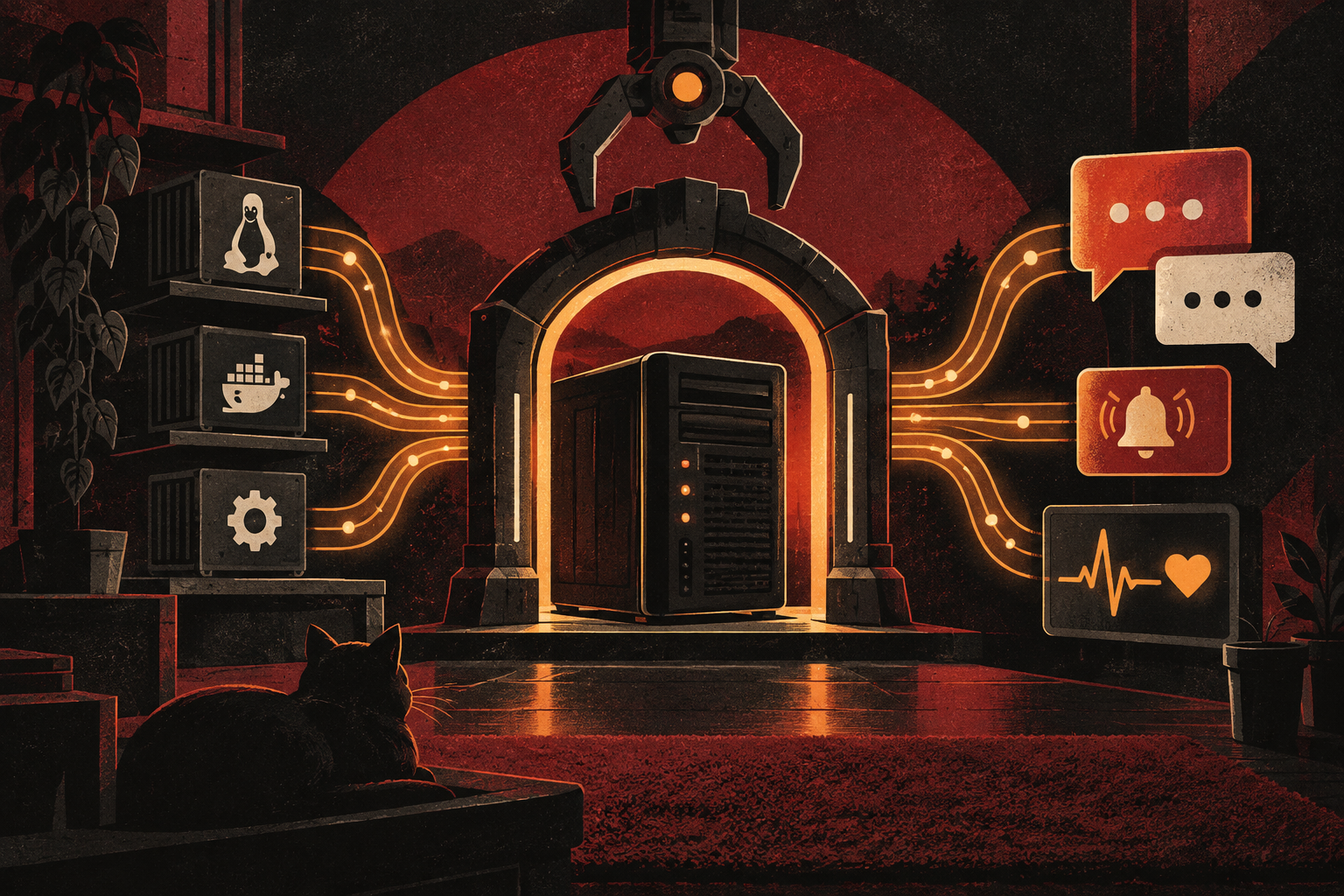
The gateway runs in an Ubuntu Linux container and starts as a system service. OpenClaw can use Docker as a sandbox for isolated tasks. A chat connection enables interaction and notifications without having to work directly on the server every time.
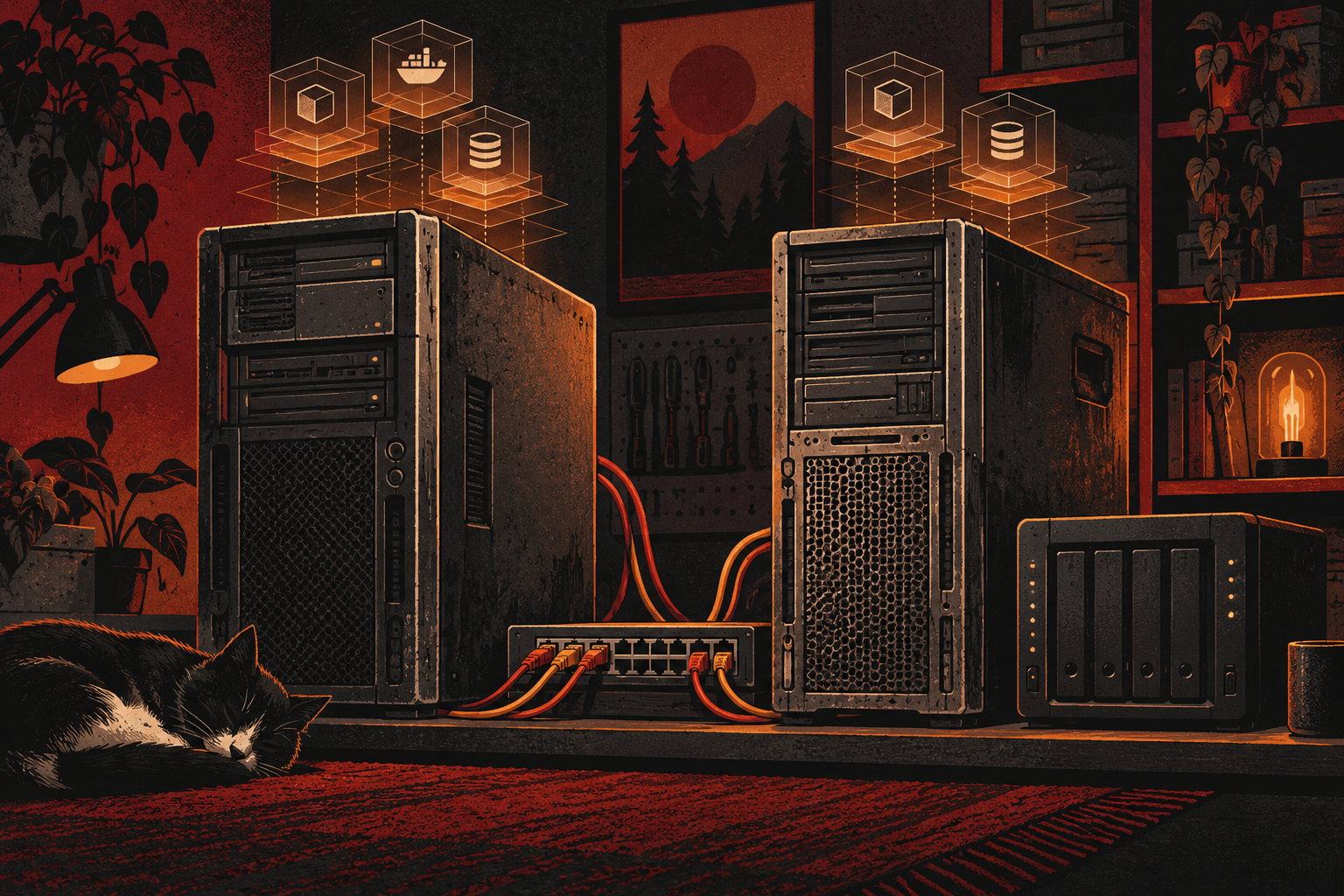
The setup is deliberately modular. The gateway, plugins, access rules, sandbox and communication channels each have their own responsibility. This makes the system more flexible, but also requires clear boundaries between those parts.
More than a chatbot
A gateway is interesting because it does more than produce text. It can use available tools, run scheduled tasks and check the state of other components. For example, I created an automatic health check that periodically verifies whether the gateway is reachable and reports the result to a chat channel.
This turns OpenClaw into a connecting layer between AI and the day-to-day management of the homelab.
Security as part of the project
A service that can use tools and is accessible over the network needs careful boundaries. During the project I therefore checked network access, tokens, plugin policy, user permissions and the isolation of commands in Docker.
Security checks revealed several warnings. Critical issues were resolved, while the remaining warnings guide further hardening. Security therefore becomes a recurring part of the experiment rather than a one-time final check.