Why I am building this
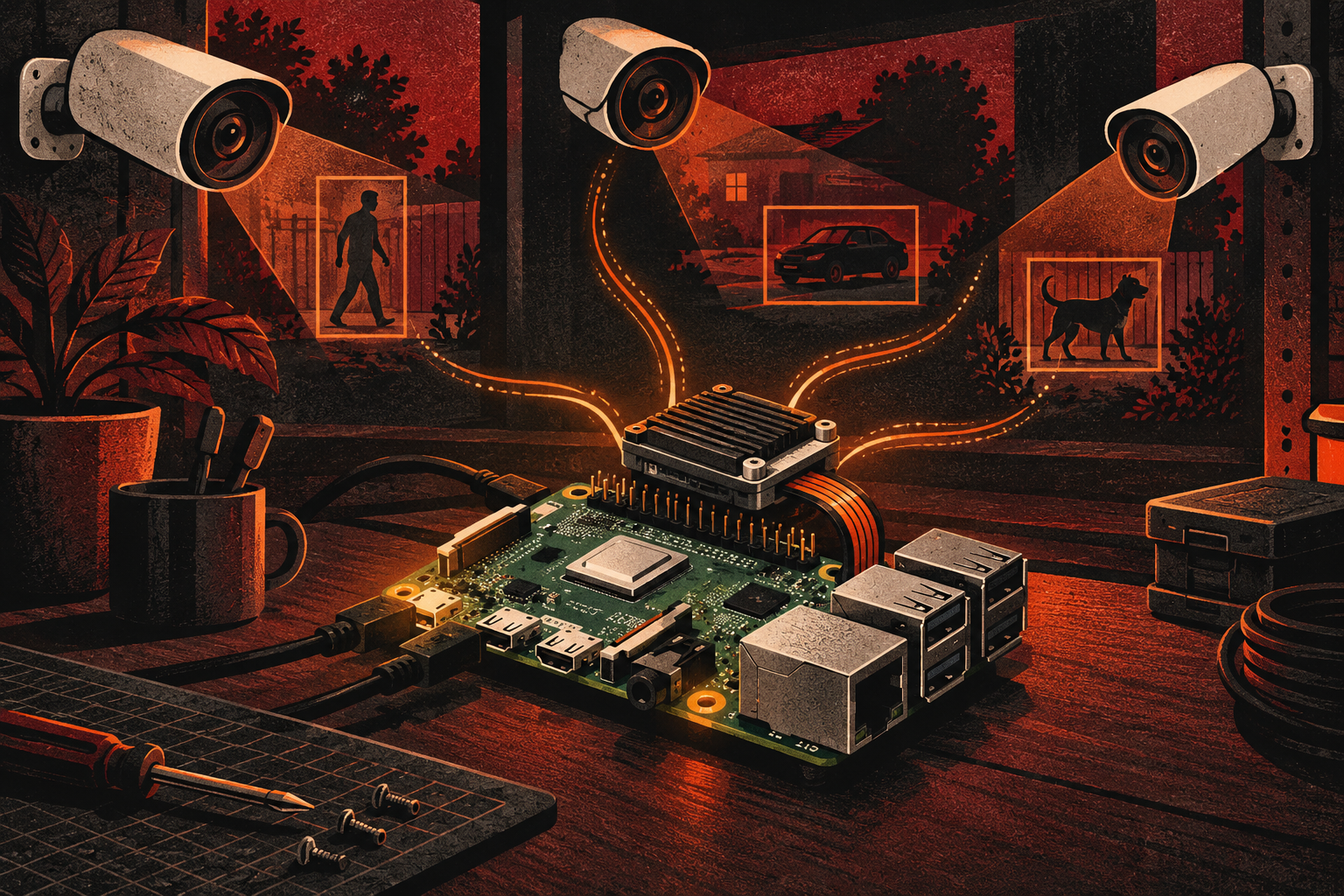
I wanted to explore how much camera surveillance can happen locally, without relying on an external cloud service for every detection. Frigate combines video streams, recordings and object detection in one system. By running recognition on the Hailo-8L, the Raspberry Pi does not need to handle all the AI work itself.
The installation is both a practical system and a learning project. It brings together Linux, Docker, camera streams, storage, AI acceleration and home automation.
The setup
The foundation is a Raspberry Pi 5 running Ubuntu. Frigate runs in Docker and uses a connected Hailo-8L for object detection. Three IP cameras provide their video streams over the local network. A separate 120 GB USB drive is available for recordings and other Frigate media.
The container configuration keeps the application, settings and media separate. A system service rebuilds the Docker setup after a restart, making the installation easier to manage and restore.
Where it became interesting
Getting the AI accelerator working was only one part of the story. Camera streams are at least as important. Incorrect credentials, differences between main and substreams, and temporary network issues can make a camera unavailable or force Frigate to restart a stream.
By comparing logs from Frigate, go2rtc and FFmpeg, I could separate problems step by step and identify whether an error originated in the camera, network, stream or detection.
What already works
- Frigate runs in Docker on the Raspberry Pi 5.
- The system recognises the Hailo-8L, which performs detection.
- Three cameras can be included in the setup.
- Recordings and media have a separate storage location.
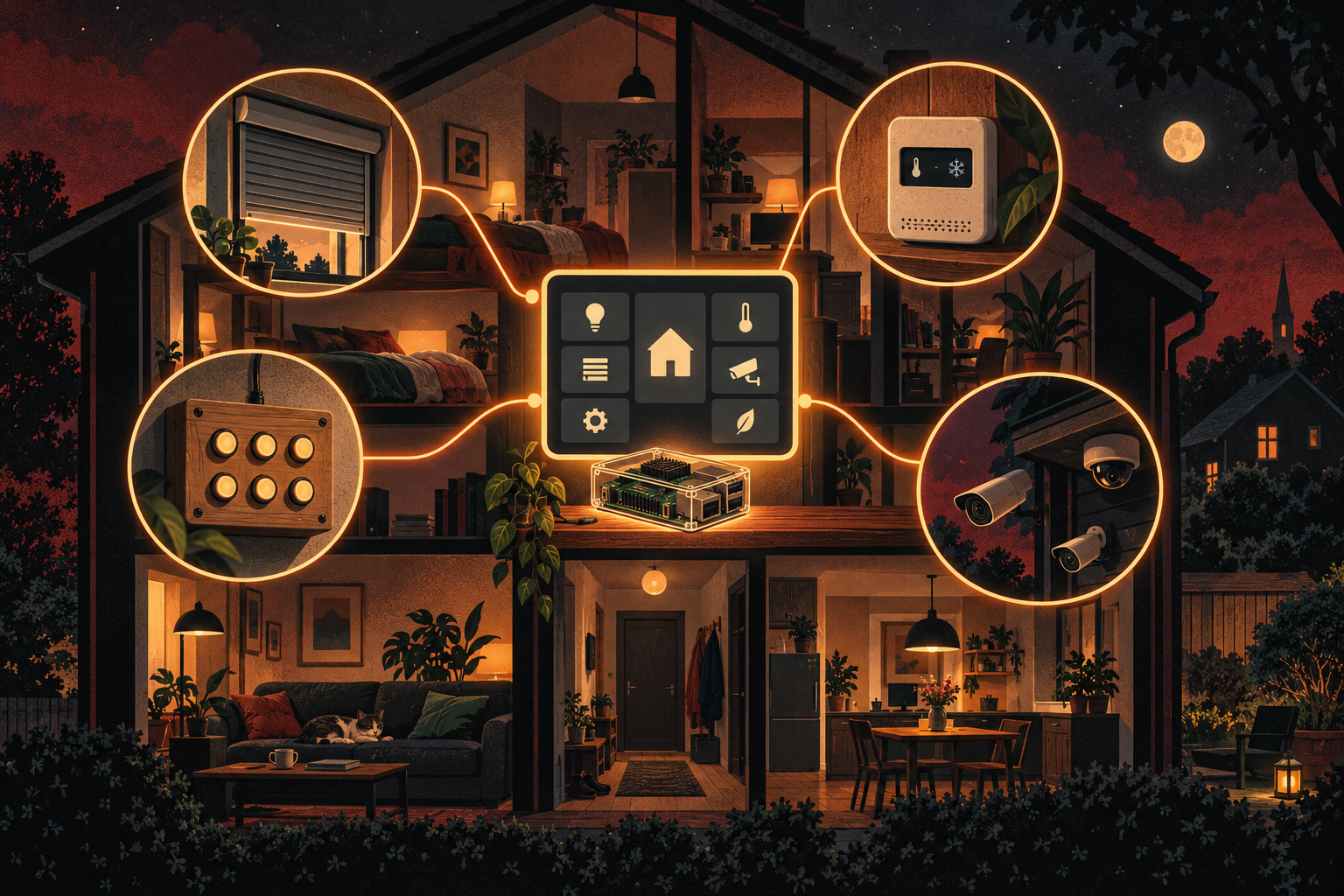
- The foundation for Home Assistant integration is in place.